
Tube Sealing and Squeeze Tube Closing: The Ultimate Guide to Methods, Machines, and Packaging Solutions
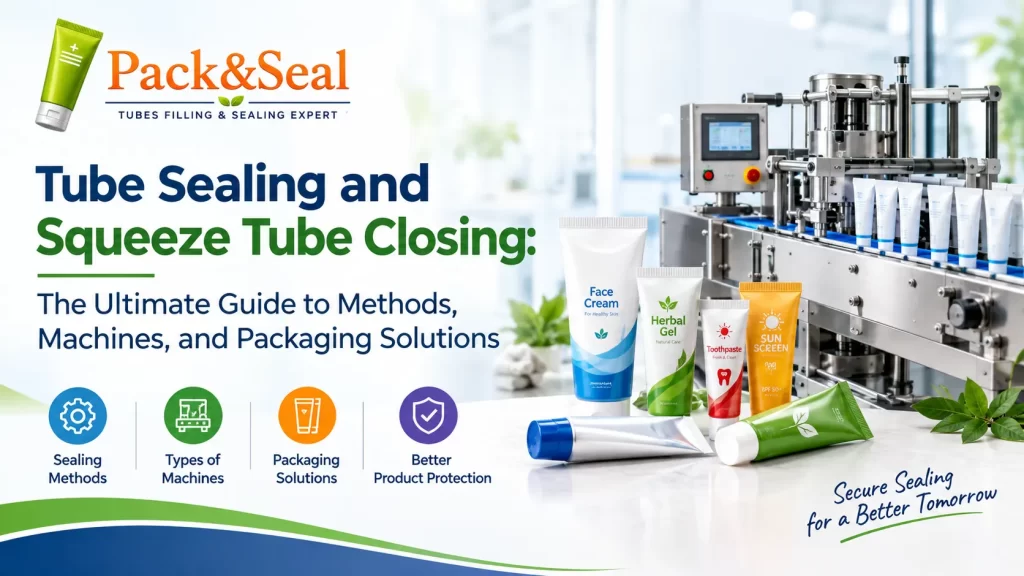
Pack and Seal provides packaging solutions designed to help manufacturers achieve clean, secure, and consistent tube packaging. Tube packaging is widely used for products such as creams, ointments, gels, adhesives, cosmetics, toothpaste, and other viscous materials. Once a tube is filled, it needs to be properly closed to prevent leakage, contamination, and product loss. This is where tube sealing and squeeze tube closing become important parts of the packaging process. Modern tube sealing equipment helps manufacturers improve consistency while reducing the amount of manual work involved. However, choosing the right machine depends on the tube material, product characteristics, production volume, and required finishing quality. What Is Tube Sealing? Tube sealing is the process of closing the open end of a filled tube so that the product remains safely contained inside. Depending on the tube material and application, different sealing methods can be used. The sealing process should create a strong closure without damaging the tube or affecting its appearance. A properly sealing tube process can also help protect the product from external contaminants and leakage during transportation and storage. For manufacturers, consistent sealing is particularly important because poorly closed tubes can result in rejected products and unnecessary packaging waste. How Does Squeeze Tube Closing Work? Squeeze tube closing generally takes place after the tube has been filled with the required quantity of product. The open end of the tube is positioned correctly before the machine performs the closing operation. In many systems, the tube is held in a fixed position while the sealing mechanism applies controlled pressure, heat, or another suitable method according to the tube material. The sealed end can then be trimmed or finished to achieve a neat appearance. The exact process varies depending on the machine design and tube type. Plastic and laminated tubes, for example, may require different sealing conditions. Common Methods of Tube Sealing Heat Sealing Heat sealing uses controlled heat to soften compatible tube material and create a secure closure. It is commonly used with plastic and laminated tubes. Temperature and sealing time need to be properly controlled for consistent results. Ultrasonic Sealing Ultrasonic sealing uses high-frequency vibrations to generate localized heat and bond compatible materials. It can provide a clean sealing process and is useful in applications where accurate and repeatable tube closing is required. Mechanical Closing Some tube packaging systems use mechanical pressure or folding mechanisms to close the tube. This method can be suitable for particular tube materials and product applications where heat-based sealing is not required. Types of Tube Sealing Machines Semi-Automatic Tube Sealing Machines Semi-automatic machines require some operator involvement during loading or positioning. They can be practical for small and medium production requirements where flexibility and controlled investment are important. Automatic Tube Sealing Machines Automatic systems can integrate tube positioning, filling, sealing, and other packaging operations into a continuous production process. They are suitable for manufacturers handling larger production volumes and looking for consistent output. Ultrasonic Tube Sealing Machines Ultrasonic machines are designed specifically for applications where ultrasonic technology is appropriate for creating the tube closure. They can provide repeatable sealing and a neat finished package when properly configured. Benefits of Using a Tube Sealing Machine Applications of Squeeze Tube Closing Why Choose Pack and Seal? Pack and Seal focuses on practical packaging requirements and understands that different products require different tube closing approaches. Our company can offer tube sealing solutions based on production requirements, tube specifications, and desired packaging performance. Selecting equipment according to the actual application can help manufacturers achieve consistent closures while maintaining an efficient packaging workflow. Proper machine selection also makes it easier to maintain product presentation and minimize avoidable packaging issues. Tube sealing and squeeze tube closing are essential stages in producing secure and professional tube packaging. From cosmetics and pharmaceuticals to food products and industrial materials, the right sealing method can help protect products while improving packaging consistency. Manufacturers should consider tube material, production volume, sealing technology, machine operation, and maintenance before selecting equipment. With the right approach, tube sealing can become a reliable part of the overall packaging process. Pack and Seal offer suitable packaging solutions for businesses looking to achieve efficient and consistent tube closing according to their specific requirements.
How Does an Ultrasonic Tube Sealing Machine Work? Features, Benefits and Industrial Applications
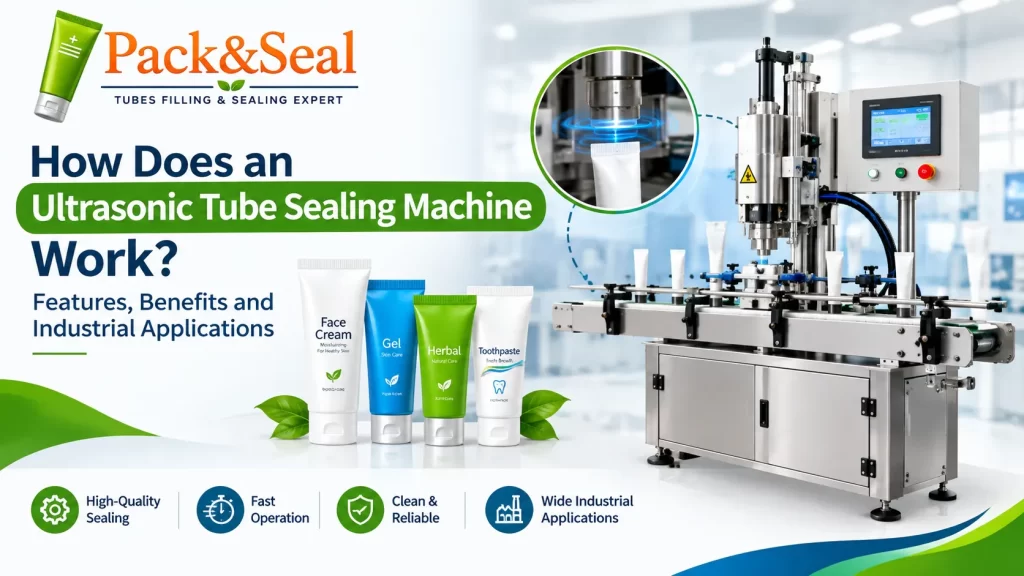
An Ultrasonic Tube Sealing Machine is designed to seal plastic tubes quickly and consistently using high-frequency ultrasonic vibrations. Ultrasonic Sealing generates localized energy at the sealing area, helping create a strong and clean seal without requiring prolonged heating. This technology is useful for manufacturers that need reliable tube sealing with good production efficiency. Pack and Seal provides practical packaging machinery solutions for industries handling different types of tubes and products. Our company can offer suitable equipment based on production requirements, tube material, filling process, and desired level of automation. What Is an Ultrasonic Tube Sealing Machine? An ultrasonic tube sealing machine is an automated or semi-automated packaging machine used to close and seal the open end of compatible plastic or laminated tubes. It uses ultrasonic vibrations to create friction and heat at the sealing interface. This process softens the material at the contact point and forms a secure seal when pressure is applied. The machine can be used for tubes containing products such as creams, gels, ointments, adhesives, cosmetic formulations, and other semi-liquid products. Depending on the production setup, sealing equipment can be integrated with filling, coding, trimming, and other packaging operations. How Does an Ultrasonic Tube Sealer Work? The working process of an ultrasonic tube sealer involves several coordinated steps. First, the filled tube is positioned correctly in the machine. The tube is then held securely so that its open end remains aligned with the ultrasonic sealing system. The ultrasonic horn applies high-frequency vibrations to the tube material. These vibrations create localized friction and heat between the layers of the tube. The softened material is pressed together, creating a strong bond. After the ultrasonic energy stops, the material cools and the sealed area becomes firm. Depending on the machine configuration, excess material may be trimmed to provide a neat appearance. The finished tube is then released and transferred to the next packaging stage. Features of Ultrasonic Tube Sealing Equipment Modern tube sealing equipment can include several features designed to support efficient production and consistent sealing. High-Quality Sealing Ultrasonic technology can create uniform seals when the machine is correctly adjusted for the tube material and application. Fast Operation The sealing process is performed rapidly, making ultrasonic systems suitable for production environments where consistent output is required. Reduced Heat Exposure Unlike conventional hot-air or heated-jaw sealing, ultrasonic sealing generates energy mainly at the sealing interface. This can be beneficial for applications where excessive external heat is undesirable. Compact Design Many machines are designed with a relatively compact footprint, making them suitable for production areas where floor space needs to be managed efficiently. Easy Operation Depending on the model, operators can control important parameters through a user-friendly control panel. This helps simplify routine operation and adjustment. Ultrasonic Sealing vs Conventional Tube Sealing Traditional tube sealing methods commonly depend on controlled heat to soften and join the tube material. Ultrasonic sealing, on the other hand, uses high-frequency mechanical vibrations to generate localized heat at the sealing point. The choice between technologies depends on tube construction, product requirements, production volume, and the desired sealing characteristics. Ultrasonic technology can provide advantages where fast cycle times, clean sealing, and controlled energy application are important. However, every tube material is not automatically suitable for ultrasonic sealing. Manufacturers should evaluate the tube structure and conduct appropriate testing before selecting the equipment. Benefits of an Ultrasonic Tube Sealing Machine There are several reasons manufacturers consider ultrasonic sealing technology for their packaging operations. Consistent Seals Controlled ultrasonic energy and pressure can help produce repeatable seals across production batches. Improved Production Efficiency Fast sealing cycles can support continuous production and reduce delays between filling and final packaging. Clean Sealing Process Ultrasonic sealing does not require the same type of continuously heated sealing surfaces used in conventional heat-sealing systems, which can help maintain a cleaner working process. Suitable for Different Industries The technology can be adapted to several applications where compatible plastic or laminated tubes are used. Reduced Product Exposure to Heat Because energy is concentrated at the sealing interface, the product inside the tube can experience less direct heat exposure compared with some conventional sealing methods. Applications of Ultrasonic Tube Sealing Machines An ultrasonic tube sealing machine can be used across different industries. Pharmaceutical manufacturers may use tube packaging for ointments, gels, and topical products. Cosmetic companies can use tubes for creams, lotions, facial products, and other formulations. The technology is also useful in personal care, chemical, adhesive, and general consumer-product packaging applications. The exact suitability depends on the tube material, product characteristics, tube dimensions, and required production capacity. Plastic Tube Sealing Machine for Modern Packaging A plastic tube sealing machine is valuable for manufacturers that need dependable closure of plastic tubes after filling. Ultrasonic technology can provide an alternative to conventional sealing methods, particularly where controlled sealing and quick operation are priorities. Before purchasing equipment, manufacturers should consider tube diameter, material composition, product viscosity, filling volume, production speed, sealing pattern, and available floor space. These factors help determine the appropriate machine configuration. Choosing the Right Tube Sealing Machine Selecting the right tube sealing machine requires more than comparing machine prices. Manufacturers should evaluate sealing technology, production capacity, automation level, tube compatibility, operating controls, maintenance requirements, and after-sales support. Pack and Seal can offer tube packaging solutions according to specific production needs. Discussing the product and tube specifications with the equipment supplier can help identify a suitable configuration and avoid compatibility issues during production. An ultrasonic tube sealing machine uses high-frequency vibrations to create localized heat and pressure, forming a strong seal on compatible tubes. Its fast operation, controlled sealing process, and suitability for various packaging applications make it useful for modern production environments. From standalone ultrasonic sealing equipment to an integrated ultrasonic tube filling sealing machine, manufacturers can select a configuration based on their production requirements. Pack and Seal focuses on providing practical packaging machinery solutions that can support consistent and efficient tube packaging operations.
Complete Guide to Tube Sealing Machines: Working, Types, Benefits & Applications
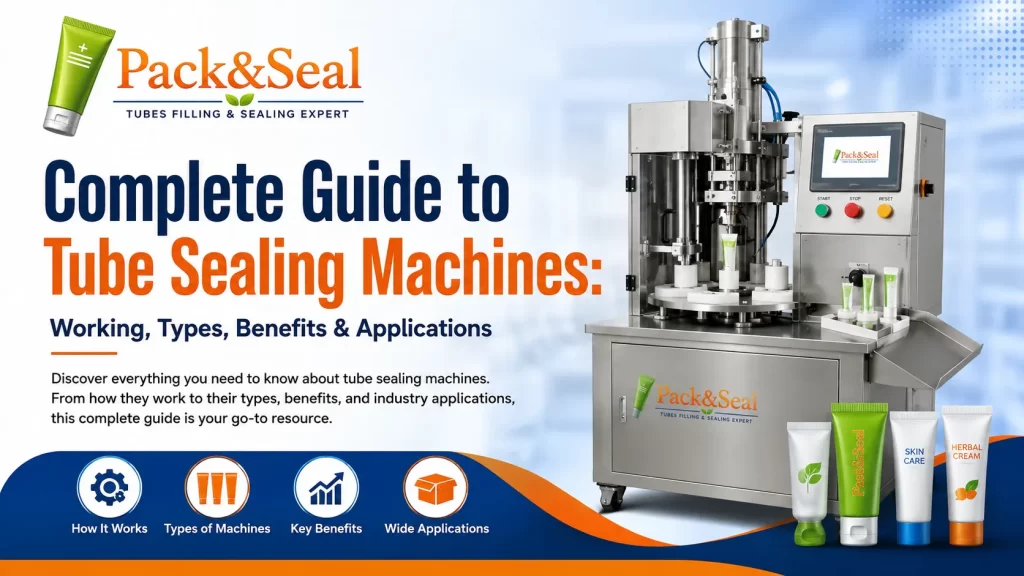
In today’s competitive manufacturing industry, packaging is just as important as the product itself. Whether it’s a pharmaceutical ointment, cosmetic cream, toothpaste, food paste, or adhesive, the packaging must be secure, leak-proof, and visually appealing. This is where a tube sealing machine plays a vital role. A tube sealing machine ensures that plastic, laminated, or aluminium tubes are properly sealed after filling, preserving product quality and extending shelf life. From small-scale manufacturers to high-volume production facilities, these machines have become an essential part of modern packaging lines. What Is a Tube Sealer Machine? A tube sealing machine is a packaging machine designed to seal the open end of filled tubes using heat, ultrasonic technology, or mechanical crimping, depending on the tube material. Once sealed, the tube protects the product from leakage, moisture, air, and contamination. Tube sealer machines are widely used in industries that require hygienic and professional packaging, including pharmaceuticals, cosmetics, food processing, chemicals, and personal care manufacturing. How Does a Tube Sealing Machine Work? Sealing method varies depending on the machine and tube material, the basic working process remains similar. Modern automatic machines perform all these steps with high precision, ensuring consistent sealing quality and minimal product wastage. Types of Tube Sealing Machines 1. Automatic Tube Sealing Machine Automatic machines are designed for high-speed production lines. They perform tube loading, sealing, trimming, coding, and discharge with minimal operator intervention. These machines are suitable for medium and large manufacturing facilities. 2. Semi-Automatic Tube Sealing Machine Semi-automatic machines require manual loading of tubes while the sealing process is automated. They are ideal for startups, small businesses, and medium-scale production. 3. Hot Air Tube Sealing Machine This machine uses controlled hot air to soften the inner layer of plastic or laminated tubes before sealing them under pressure. It produces strong and uniform seals. 4. Ultrasonic Tube Sealing Machine Ultrasonic technology seals tubes using high-frequency vibrations instead of heat. It is ideal for temperature-sensitive products and provides clean, reliable seals without damaging the contents. 5. Aluminum Tube Sealing Machine These machines use mechanical folding and crimping to seal aluminum tubes commonly used for pharmaceutical ointments, medicinal creams, adhesives, and industrial products. Benefits of Using a Tube Sealing Machine Investing in a quality tube sealing machine offers several operational and commercial advantages. Leak-Proof Packaging Proper sealing prevents product leakage during storage, transportation, and handling. Improved Product Shelf Life A secure seal protects the product from moisture, dust, oxygen, and contaminants, helping maintain freshness and effectiveness. Consistent Sealing Quality Automated machines deliver uniform seals on every tube, reducing rejects and improving overall product appearance. Increased Production Efficiency Automatic tube sealing machines significantly increase production speed while reducing manual labor and operational costs. Hygienic Packaging Tube sealing machines support clean and sanitary packaging processes, making them suitable for pharmaceutical, cosmetic, and food industries. Reduced Product Waste Accurate sealing minimizes material wastage and prevents product loss due to improper sealing. Professional Product Appearance Neatly sealed tubes enhance product presentation, improve brand image, and increase customer confidence. Applications of Tube Sealing Machines Tube sealing machines are widely used across various industries due to their versatility. Pharmaceutical Industry Used for packaging ointments, medicated creams, gels, antiseptic products, and topical medicines. Cosmetic Industry Ideal for sealing face creams, moisturizers, sunscreens, lotions, hair gels, facial cleansers, and beauty products. Food Industry Suitable for products such as mayonnaise, sauces, chocolate paste, honey, cheese spreads, tomato paste, and other semi-liquid food items. Chemical Industry Used for packaging industrial adhesives, sealants, lubricants, grease, and specialty chemicals. Personal Care Products Commonly used for toothpaste, shaving cream, hand creams, skin care products, and herbal formulations. Factors to Consider Before Buying a Tube Sealing Machine Selecting the right machine depends on your production requirements and packaging needs. Consider the following factors before making a purchase: Maintenance Tips for Better Performance Regular maintenance helps extend machine life and maintain sealing quality. Proper maintenance reduces downtime and ensures reliable machine performance. Why Choose Pack and Seal? When it comes to reliable packaging machinery, Pack and Seal is a trusted name in the industry. Our company offers advanced tube sealing machines designed for precision, durability, and high production efficiency. Whether you require a semi-automatic solution for small-scale manufacturing or a fully automatic machine for large production lines, Pack and Seal provides customized solutions to meet diverse industrial requirements. Built with high-quality components and modern technology, Pack and Seal’s tube sealing machines deliver consistent sealing quality, user-friendly operation, low maintenance, and long service life. The company’s commitment to quality, innovation, and customer satisfaction makes it a preferred choice for pharmaceutical, cosmetic, food, and chemical manufacturers. Conclusion A tube sealing machine is an essential investment for businesses looking to improve packaging quality, enhance production efficiency, and protect product integrity. With options ranging from semi-automatic to fully automatic models and multiple sealing technologies, manufacturers can choose a machine that best suits their production requirements. If you are looking for dependable, efficient, and high-performance tube sealing machines, Pack and Seal offers innovative packaging solutions designed to meet the evolving needs of modern industries. Investing in the right tube sealing machine not only streamlines production but also helps deliver safe, attractive, and leak-proof products to customers.
Insights, Innovations & Updates from the Tube Packaging Industry
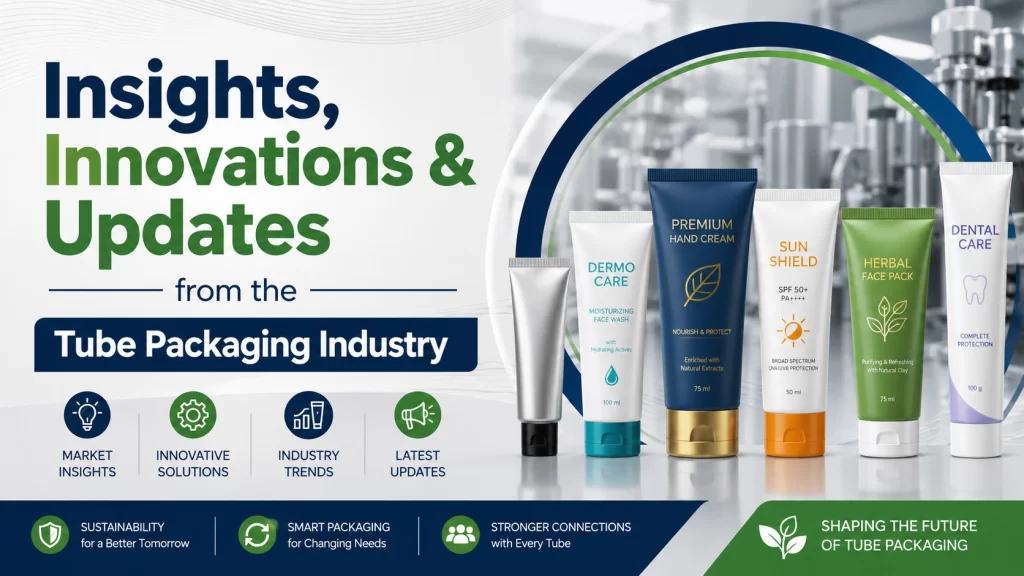
Welcome to the Pack & Seal Blog, where we share the latest insights, industry trends, and technical knowledge related to Tube Filling, Sealing, and Packaging Machines. At Advance Technology India, we believe that knowledge and innovation play a key role in improving packaging quality and production efficiency. Through our blog, we aim to help manufacturers stay updated with the latest technologies and best practices in tube packaging. What You’ll Find Here ✔️ Latest trends in Plastic Tube, Laminated Tube, and Aluminum Tube Packaging✔️ Innovations in Ultrasonic Tube Sealing Technology✔️ Machine maintenance tips and troubleshooting guides✔️ Packaging solutions for Cosmetic, Pharmaceutical, Chemical, Food, and Adhesive Industries✔️ Production efficiency improvement tips✔️ Tube packaging quality control methods✔️ New machine launches and technology updates✔️ Industry case studies and project highlights Why Follow Our Blog? Stay updated with the latest packaging technologiesLearn how to improve machine performance and production speedGet expert insights from industry professionalsUnderstand modern packaging requirements across industriesExplore better sealing and filling solutions for your products At Pack & Seal, we share practical knowledge to help manufacturers make better packaging decisions and achieve higher production efficiency. Stay connected. Stay updated. Grow with better packaging technology.